Step into a world of stability, transparency, and sustainable real estate investment.
At CPNREIT, we are dedicated to sustainable growth by balancing business success with our responsibility to the environment, society, and good governance (ESG).

Sustainability Highlights
Key Achievements and Highlights in 2025
- S&P Global Sustainability Yearbook 2026: CPNREIT was selected as a member of the S&P Global Sustainability Yearbook in the Real Estate sector for the fifth consecutive year, reflecting its strong ESG performance across environmental, social, and governance dimensions.
- GRESB Rating: CPNREIT received a 2-star rating in the 2025 Global Real Estate Sustainability Benchmark (GRESB) Real Estate Assessment, reaffirming its commitment to creating sustainable value in the real estate sector.
- Sustainability-linked Bonds: In October 2025, CPNREIT issued two series of sustainability-linked debentures totaling Baht 6,000 million, becoming the first REIT in Thailand to do so. The proceeds were used to repay bank loans, with interest rates linked to KPIs including Scope 1 and Scope 2 carbon intensity reduction and the number of buildings with GRESB-recognized certifications. This initiative reflects CPNREIT’s commitment to sustainable development while reducing long-term financing costs.
Greenhouse Gas Emissions Reduction Performance
Scope 1 (Direct GHG emissions):

Scope 2 (Indirect GHG emissions):
Scope 3 (Other indirect GHG emissions):
Overall, CPNREIT achieved an 21.9% reduction in Scope 1 and Scope 2 greenhouse gas emissions compared to the 2019 base year, and a 25.7% reduction in Scope 1, Scope 2, and Scope 3 emissions.
Sustainable Building Certifications
Central Pinklao:


Central Chiangmai Airport:
Central Rama 3:
Central Rama 2:
Central Pattaya:
Central Marina:
Central Lampang:
The Ninth Towers:
R House (Unilever House):
Green Finance
CPNREIT leverages Green Finance to reduce borrowing costs, support greenhouse gas emissions reduction, and enhance resilience to climate change.

Net Zero
ambition

Pioneering Sustainability-linked Bonds
In October 2025, CPNREIT became the first REIT in Thailand to issue sustainability-linked debentures, totaling Baht 6,000 million across two series. The bonds link financing costs to sustainability KPIs, including carbon intensity reduction and GRESB-recognized building certifications.

Sustainability Policy And Goals
CPNREIT is committed to conducting business with integrity, transparency, accountability, and strong corporate governance. Guided by Environmental, Social, and Governance (ESG) principles, CPNREIT complies with relevant laws and regulations while pursuing steady, sustainable, and long-term growth for its trust unitholders.
The Trust invests in high-quality real estate and leasehold rights across Thailand, including shopping centers, office buildings, hotels, and related commercial properties. These assets are managed to generate stable income through rents, service fees, asset enhancement, and strategic portfolio management.
The REIT Manager integrates corporate social responsibility into its operations with a focus on fair business practices, anti-corruption, human rights, fair labor practices, quality of life, and stakeholder responsibility. Through these efforts, CPNREIT aims to create long-term sustainable value for unitholders, tenants, customers, employees, communities, and society at large.
Annual Report 2025
Materiality Assessments
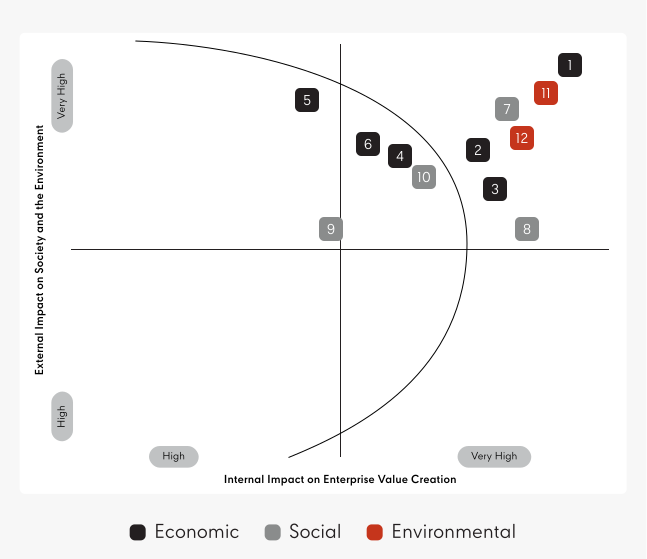
Economic
- 1 Economic Performance
- 2 Supply Chain Management & Work Performance of the Property Manager
- 3 Corporate Governance & Business Ethics
- 4 ESG Considerations in Products & Service
- 5 Tenant Relationships and Retention
- 6 Risk & Crisis Management
Social
- 7 Alignment with Stakeholder
- 8 Community Impact & Development and Human Rights
- 9 Human Capital Management
- 10 Cybersecurity and Data Privacy
Environmental
- 11 Energy & Resource Efficiency Management
- 12 Environmental Concern & Climate Change

Aligning Sustainability Strategies
With the UN Sustainable Development Goals (SDGs)


Material Topics
- Portfolio diversification
- Investing in sustainable products & services
- Remuneration setting for property managers that drives efficiency in benefit procurement
- Stable returns to the trust unitholders
- Internal control
- Risk & crisis management
- Corporate governance & business ethics


Material Topics
- Talent attraction & retention through recruiting experienced individuals with expertise for REIT management and supporting relevant knowledge development for revenue generation
- Policy influence
- Cyber security
- Alignment with stakeholders
- Human rights


Material Topics
- Sustainable supply chain management & work performance of the property managers
- Customer relationship management & tenant retention
- Management system & innovation management
- Environmental Concern & climate change
- Resource efficiency & circularity
- Community impact & development
- Product / Service quality
- Safety and hygiene
Managing The Impact On Stakeholders In The Value Chain

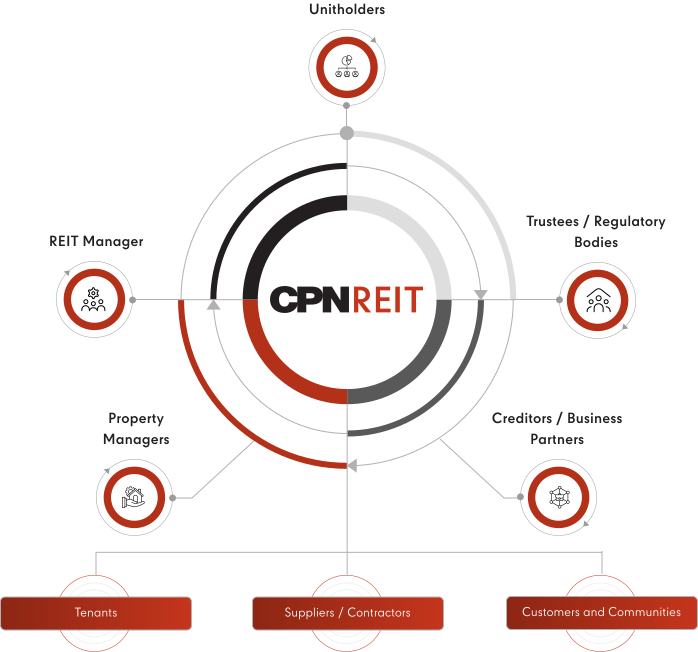
Stakeholder Engagement Framework
Divide stakeholders into primary and secondary groups to assess risks and direct and indirect impacts, and determine appropriate engagement platforms for the identification of material topics.
Provide avenues for stakeholder communication through both online platforms and in-person meetings, with dedicated employees responsible for carrying out this process to ensure engagement is conducted in accordance with the established procedures and on a regular basis. This includes maintaining mechanisms for receiving and responding to stakeholder suggestions and complaints, and conducting satisfaction surveys to guide improvement.
Establish strategy and process for responding to stakeholder needs and suggestions in a balanced way, based on risk management plans, to drive internal process development and improvement and ensure accuracy and transparency in disclosures.

Analysis of Stakeholders in the Value Chain
We divide our primary stakeholders into five groups: 1) unitholders (investors), 2) trustees / regulatory bodies, 3) property managers, 4) REIT manager / employees and 5) business partners; and secondary stakeholders into three groups: 1) tenants, 2) suppliers / contractors, and 3) customers and communities. Our stakeholder engagement policies and practices are put in place to uphold fair business activities and ensure that due consideration is given to all stakeholders to deliver sustainable mutual benefits.